Before the Bell: Twenty Minutes That Belong to Great Bedwyn

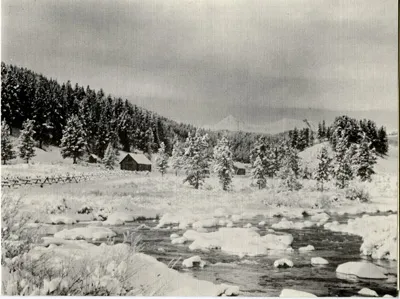
Photo by Photo by Georg Eiermann on Unsplash on Unsplash
It is 8.32 on a damp Tuesday in November and Great Bedwyn is already doing its quiet morning arithmetic. One child, two bags, one scooter, a forgotten water bottle and a grandmother who has driven half a mile because the heavens opened at exactly the wrong moment. By 8.40, the sum will be complete.
If you live in the village and don't have children at the school, it is easy to miss. The morning school run is not an event. There is no banner, no stewards, no programme. But stand near the gate for a few days and you begin to see a small, reliable piece of village life unfolding in front of you — the same faces, the same rhythms, the same low-grade chaos, rain or shine.
The first arrivals
The earliest walkers come down from the direction of the canal and the older parts of the village, usually with a dog in tow and a child who has decided that today is the day to walk at the speed of a snail. These are the families who leave with time to spare and arrive with three minutes to spare, which in school-run terms is practically a luxury. You can spot them by the fact that they are not running.
Then comes the bicycle contingent. Great Bedwyn is flat enough in the middle and hilly enough at the edges to make cycling a genuine choice rather than an extreme sport. There are balance bikes, a few proper pedal bikes, and at least one scooter that sounds like a shopping trolley going over cobbles. Helmets are adjusted, gloves are found, and somebody's chain comes off at precisely the wrong moment. A passing parent stops. The chain goes back on. The morning continues.
The grandparent shift
A good number of the adults at the gate are not parents at all. They are grandparents, aunts, neighbours and childminders, and they are doing the kind of everyday childcare that keeps villages working. You will see a nan in a waterproof coat carrying a book bag and a bag of apples, and a grandad who has clearly been told to "just drop them at the gate" and is instead standing twenty yards inside the playground having a full conversation about dinosaurs.
This is one of the quiet strengths of a village school. The adults know each other, or they know someone who knows someone. A child who has forgotten their PE kit is not a crisis; it is a problem with a neighbour-shaped solution. A parent running late knows that someone will wait. The gate is not just a drop-off point. It is a small, informal safety net.
The small theatre of the crossing
The crossing patrol is the still point in all of this. High-vis jacket, lollipop sign, a manner that suggests they have seen every kind of morning and are not about to be rushed by any of them. Cars slow. Children gather. There is a brief, well-practised choreography of wheels, feet and umbrellas, and then the road is clear again.
It is easy to take this for granted, but the crossing is one of the few moments in the village day when everyone has to cooperate. Nobody is in charge of the weather. Nobody is in charge of the traffic. But for a few minutes each morning, a group of people of different ages and different hurry levels agree to do the same thing at the same time. That is not a small thing.
The gate as a village square
The school gate is the closest Great Bedwyn gets to a village square before nine o'clock. It is where you hear about a broken fence, a lost cat, a spare ticket for something at the hall, and the fact that the shop has finally got the good sausages back in. It is where new families are absorbed, often without anyone formally deciding to absorb them. Someone asks where they have moved from. Someone else recommends a plumber. A third person offers a spare pair of gloves.
There is also the lost property economy. Hats, water bottles, book bags and one memorable cardigan have all passed through the gate and into the care of whoever spotted them first. The system is not written down anywhere. It works anyway.
When the rain comes
On wet mornings, the whole operation contracts. Umbrellas appear. Cars queue a little more patiently than you might expect. The walkers become a tight knot of hoods and wellies, and the cyclists become a slightly sorry-looking procession of waterproof trousers. Someone always has a spare umbrella. Someone always holds the gate. Someone always says "morning" to the crossing patrol, even when they are clearly not feeling it.
Great Bedwyn does not make a fuss about this. It is just what happens. The school run is not a performance. It is a habit, and habits are what hold a place together when the weather is doing its worst.
What twenty minutes buys
By 8.50, the gate is quiet again. The playground has swallowed the children. The adults disperse towards cars, bikes, the shop, the station, the canal path and the rest of their day. The village goes back to being a village rather than a school run.
But those twenty minutes matter. They are a daily roll-call of the village's youngest residents and the people who look after them. They are a reminder that Great Bedwyn is not just a pretty place to live, but a place where people turn up for each other in small, unglamorous ways. Rain or shine, term time or not, the 8.40 club does its thing. And the village is better for it.