The Long Game: Seeds, Sheds and a Waiting List on Great Bedwyn's Allotments
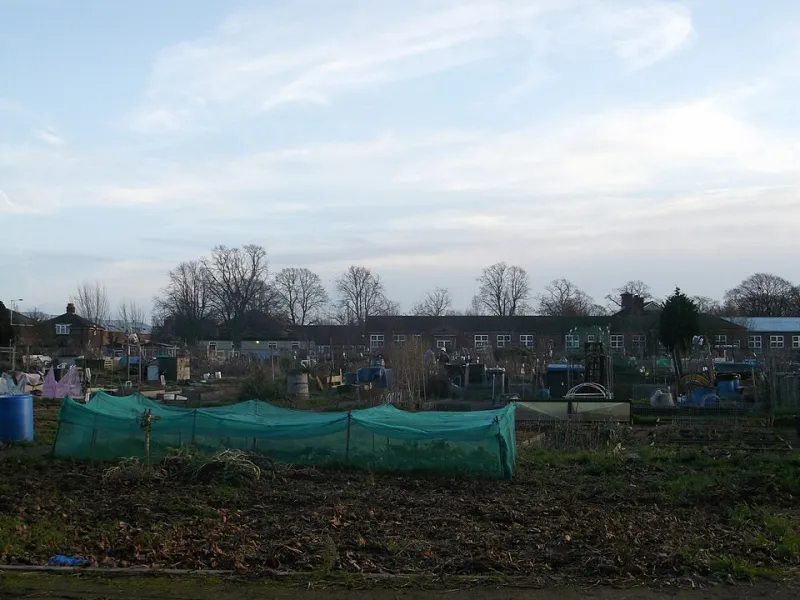
Photo: David Anstiss , CC BY-SA 2.0, via Wikimedia Commons
A cold, bright Tuesday morning in November, and the gate at the top of the allotment path is stiff with damp. Beyond it, the plots are doing what plots do in winter: looking a bit scruffy, quietly getting on with things. Frost has silvered the kale. Somewhere near the middle, a radio is playing to nobody in particular, and a flask is being unscrewed.
Great Bedwyn's allotments are not a grand estate. They are a patchwork of beds, sheds, fruit cages and improvised paths, held together by good intentions and the occasional bag of manure. But spend an hour here and you learn more about the village than you would from a month of parish notices.
A morning of small, necessary things
Margaret has had her plot for over thirty years. She is the sort of grower who says she is ‘cutting back’ and then arrives with a car boot full of compost. Today she is pruning blackcurrants and explaining, with some passion, the difference between a tidy plot and a productive one.
‘People think winter is the quiet time,’ she says, secateurs in hand. ‘It is not quiet. It is just slower. You are feeding the soil, fixing the shed, reading the catalogues. The growing is the easy bit. The thinking is what takes the time.’
Nearby, Dev is wrestling a sheet of weed membrane over a bed that, by his own admission, got away from him in July. He took on a half plot in spring 2024, tempted by the idea of tomatoes that actually tasted of something. He has since learned about blight, couch grass and the generosity of neighbours.
‘Everybody warned me,’ he says. ‘I thought they were being dramatic. They were not being dramatic.’
What the waiting list actually says
There is a waiting list. There is always a waiting list. At the moment it runs to a dozen or so names, and the honest estimate is two to three years for a full plot, less if you are willing to start with a half.
The list is kept by the allotment association, and it tells its own story about village life. Some people are downsizing their gardens. Some are in new-build houses with a strip of lawn and a trampoline. Some want to cut the food bill. Some want somewhere to go on a Sunday morning that is not a supermarket.
‘We get a lot of younger families now,’ says Ruth, who has been involved with the site for years. ‘And people who have moved here from towns and are used to a different kind of gardening. The list is not just a queue. It is a snapshot.’
The association is careful about plot sizes. A full plot is a lot of ground, and a lot of ground can become a lot of guilt. Half plots are offered first, and shared plots are not unheard of. The aim is to get people growing, not to set them up for a summer of apology.
The winter to-do list
If you are new to this, the winter work can look bafflingly small. A few cloves of garlic in the ground. Broad beans sown in pots or straight into a sheltered bed. Mulch on the beds. A coat of oil on the tools. A notebook with a rough plan for what went where last year and what should go where next.
But the small things are the point. Soil care is not glamorous. It is barrowing well-rotted manure, bagging leaves from the lane, turning the compost, and resisting the urge to dig everything over just because it looks like doing something.
Seed catalogues arrive in November and December, and they are dangerous. The photographs are better than the reality. The varieties multiply. Margaret has a rule: order what you will actually eat, plus one experiment. Dev has already broken it.
‘I have ordered three types of chilli,’ he says. ‘I do not really like chilli.’
Swaps, gossip and the honesty bench
The allotment is not just a set of individual plots. It is a shared patch with its own economy. Surplus courgettes appear on a bench by the gate. Seed packets are passed around. A rotavator is borrowed. Somebody knows somebody with a trailer of manure. Somebody else has a spare water butt.
The seed swap in the village hall in February is the social highlight of the growing year, a chance to offload the seeds you bought in a moment of optimism and pick up something more sensible. It is also a chance to catch up on who is doing what, and whose shed roof finally gave up.
There is gossip, of course. There is always gossip. But it tends to be gentle gossip, the kind that ends with somebody offering you a marrow.
If you fancy a plot
If you are thinking about it, the best first step is not a form. It is a walk down to the site on a Saturday morning, when people are about, and a conversation with whoever is holding a rake. Ask about the water supply, the rent, the state of the paths, and how much time it really takes.
Be honest about your summer. A plot can absorb an hour a week and still look chaotic in July. Start small. Ask for a half plot. Share with a neighbour. Borrow a book from the library rather than buying five. And do not panic about the weeds — everyone has a corner that has got away from them. The trick is to make sure it is not the same corner every year.
The waiting list is managed through the parish council and the allotment association, and details are usually on the village noticeboard. It may take a while. That is not a bad thing. It gives you time to read the catalogues, sharpen the spade, and decide what you actually want to grow.
At the gate, Margaret is packing up. The light is going. She has a bag of prunings, a flask to wash, and a plan for the broad beans.
‘It is the best club in the village,’ she says. ‘You just have to turn up.’