The Kitchen-Table Forecast: How Great Bedwyn Reads Its Own Weather
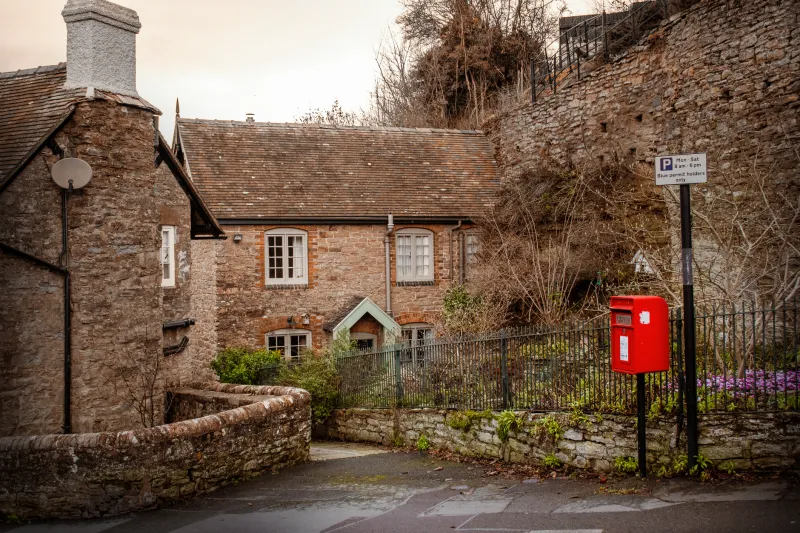
On a grey November morning, with the first proper frost still refusing to commit, a rain gauge stands on a post behind a hedge just off the High Street. Its owner—a retired teacher who would rather the gauge got the attention than she did—walks out in slippers, reads the level, and writes a number in a notebook. Then she looks at the sky, mutters something about the wind, and goes back inside for tea.
It is not glamorous work. It is not official work, either. But multiply that small routine by a handful of gardens, lanes and kitchen windows around Great Bedwyn, and you get something quietly useful: a village weather diary, kept by neighbours, for neighbours.
A jar, a gauge and a notebook
The equipment is deliberately humble. Most of the recorders use a simple plastic rain gauge, the sort you can buy for less than the price of a decent sandwich. Some have a frost thermometer fixed to a shed wall. One keeps a jam jar with a painted mark on the side for a rough check when the proper gauge is frozen solid. Nobody is pretending this is the Met Office. The point is not precision for its own sake. The point is noticing what happens here, in this village, on this lane, rather than what a forecast map says about the whole of Wiltshire.
That distinction matters more than you might think. Great Bedwyn sits in a folded landscape of water, trees and sloping ground. Cold air does not spread itself evenly across it. Rain does not always fall in the same amount on both sides of the railway line. A forecast that says frost is likely can be right for one part of the parish and politely wrong for another.
Why one lane frosts first
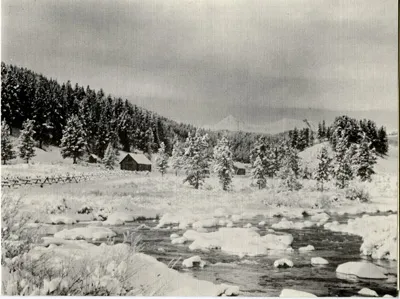
The phrase you hear from the long-standing recorders is frost hollow. It sounds like a piece of old country lore, but the idea is straightforward enough. Cold, dense air drains downhill and settles in low spots, especially on still, clear nights. Near the Dun and the canal, where the ground is damp and the land dips, that cold air can pool. The result is a lane that turns white while the churchyard is merely damp and the higher ground is wondering what all the fuss is about.
One neighbour on the edge of the village has kept a winter note of this for years. She does not claim to have discovered anything new. She simply knows that when the temperature drops just so, the route down towards the water will be slippery before the main road is. That knowledge gets passed on in the way village knowledge usually does: a text message, a word at the shop, a warning pinned to the noticeboard when the forecast looks dodgy.
It is not a formal system. It is better than that, in some ways. It is personal. Someone has actually walked the lane. Someone has looked at the ice and thought about the school run, the early shift at the station, the neighbour who is not steady on their feet.
The morning phone chain
Weather-watching in Great Bedwyn is only partly about numbers. It is also about timing. A reading taken at nine in the morning is useful for the diary, but a warning passed on at half six is useful for the day. So the informal network tends to wake early.
When a hard frost is expected, one recorder checks the thermometer before the kettle goes on. If the reading is low enough, she sends a short message to two or three neighbours. They send it on. By the time the village is properly awake, the information has travelled further than the ice has. It is a small thing, but small things are often the ones that keep a place knitted together.
The same happens with rain. After a heavy night, the question is not just how much fell but where it went. Did the surface water clear? Is the brook behaving itself? Has the Dun risen in that quick, brown way it does after wet weather on higher ground? The answers vary enough that a neighbour on one side of the village can be genuinely surprised by what another has seen.
What the river is telling us
River levels are the part of the diary that makes people thoughtful. The Dun is not a mighty river, but it is a responsive one. It can be low and clear one week and noisy the next. The canal, meanwhile, has its own rhythms, managed and measured, but still affected by the same rain that fills the garden gauges.
A few residents keep a simple record of how high the water gets at a particular bridge or bank. A stick with marks on it is not a sophisticated instrument, but it does the job. Over a year, those marks build a picture of how the village's waterways behave in different seasons. They also prompt practical conversations: which path gets muddy first, where water gathers on the road, and which garden gate is best avoided after a wet fortnight.
There is no panic in these conversations. Great Bedwyn has lived beside water for a long time. But there is a useful kind of attention, the sort that comes from noticing rather than worrying.
A year of small numbers
The 2026 diary is not a spreadsheet. It is a dog-eared notebook, a few phone photos and a handful of memories. It records a wet week in spring, a dry spell in summer, the first frost of autumn and the sort of grey, drizzly day that does not deserve a line in history but does deserve a line in the notebook.
What does a year of local weather-watching actually say? Mostly, it says that Great Bedwyn is not one climate but several. It says that the lane by the water is not the same as the road by the station. It says that a neighbour with a rain gauge and a good memory can be more useful than a forecast that has never stood at the bottom of your garden.
And it says something else, too. It says that paying attention is a form of neighbourliness. You do not need a weather station to join in. A jar, a thermometer, a note of when the first frost hits your bit of pavement—that is enough. The village diary is always open to another page.