Ropes, Rounds and a Thermos: A Tuesday Night Up the Tower at St Mary's
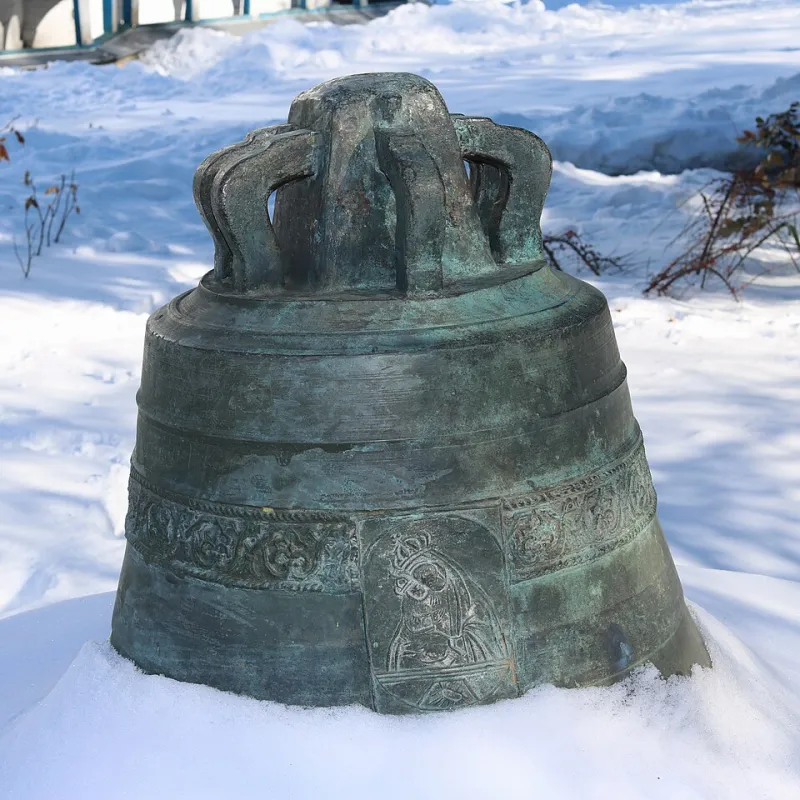
Photo: George Chernilevsky, CC BY 4.0, via Wikimedia Commons
The churchyard at St Mary's is properly dark by half six on a November Tuesday. The canal path has gone quiet, the village shop has cashed up, and most of Great Bedwyn is thinking about supper. Up above the porch, though, there is a light in the tower. If you stand still in the lane, you can just hear the low creak of a rope being tested and the murmur of people comparing diaries.
This is practice night.
The climb before the clamour
The ringing chamber is not a grand space. It is a practical room with a stone floor, a low ceiling, a noticeboard of rotas, and a flask that has clearly seen service. Around the walls, ropes hang down through holes in the ceiling, each with a striped woollen grip called a sally. In the corner there is a small table with biscuits, a visitors' book and a tin for the tea fund.
People arrive in ones and twos, shedding coats and wellies. There is a retired teacher, a parent who has come straight from school pickup, someone who learned to ring here decades ago and never quite stopped, and a newer recruit who is still at the stage of writing things down. Nobody is in a hurry. The first ten minutes are for catching up, because the ringing is only half the point.
What a practice night actually is
If you have only heard bells on a Sunday morning or as the confetti flies at a wedding, it is easy to assume the band simply turns up and pulls. In reality, a practice night is a rehearsal. It is where the team learns new patterns, corrects bad habits and works out who will ring which bell on Sunday.
The evening usually starts with ringing up — hauling the bells from their resting position to the mouth-up position so they can be controlled properly. Then comes rounds, the simple descending scale that most people recognise. After that, the tower captain might call for call changes, where ringers swap places in the order at the command of a conductor. Later, if the band is feeling brave, they might attempt a method: a longer, more intricate pattern where each bell follows a set path through the others.
It sounds complicated because it is. But it is complicated in the way that a country dance is complicated: once you are in the middle of it, you are following a pattern rather than reading a score. Nobody hands out sheet music. Ringers learn by watching, listening and repeating. The aim is not volume but striking — getting each bell to sound at exactly the right moment so the whole thing blends. When it works, the tower hums. When it does not, everyone laughs and starts again.
A very old kind of teamwork
Bell ringing has been part of English parish life for centuries, and Great Bedwyn's tower has watched plenty of it. Change ringing — the organised patterns that make English church bells distinctive — developed in the 1600s, and village bands have been practising ever since. The bells here have rung for services, weddings, funerals and national moments. They have also rung, perhaps more importantly, for ordinary Tuesday nights when nothing much was happening except the slow business of getting better.
What strikes you in the chamber is how quietly disciplined it all is. There is no conductor with a baton, no sheet music on stands. The conductor calls a change, the ringers adjust, and the rope room fills with a sort of focused calm. People listen to the bell in front of them, the bell behind them and the bell across the circle. It is teamwork in its plainest form: you cannot do it alone, and you cannot fake your part.
The learning curve — and why it is gentler than it looks
One of the biggest myths about bell ringing is that you need to be musical. You do not. You need to be steady, patient and willing to listen. The first lessons are about handling a bell safely: how to pull, how to set, how to stand. Only after that does the pattern-making begin. New ringers are usually taught one to one, often on a tied bell, before joining the main band.
Another myth is that you need to be strong. Ropes can be heavy, but technique matters far more than muscle. Ringers come in all shapes and ages. What the tower really wants is reliability and a sense of humour. A practice night is not an audition. It is a workshop, and mistakes are how the learning happens.
The social side of a rope circle
After an hour or so, the ropes are set and the kettle goes on. This is when the tower becomes a village institution rather than a hobby. There is talk of who is ringing at the weekend, who needs a lift, whose knee is playing up, and whether the weather will hold for the Remembrance service. The biscuit tin does the rounds. Someone remembers a funny story about a wedding party that arrived early. Someone else checks the rota and quietly swaps a slot so a neighbour can get to a family do.
It is the sort of low-key neighbourliness that Great Bedwyn does well. Nobody makes a fuss about it. It just happens, week after week, up a spiral staircase most people never climb.
An open invitation
If you have ever stood in the lane and wondered what goes on up there, the band would genuinely like to hear from you. You do not need experience. You do not need to read music. You do not even need to be sure you want to commit. Most towers are happy for curious visitors to come and watch a practice, ask questions and see whether it suits them.
The best first step is to get in touch with the church or the tower captain before turning up, so they know to expect you and can pair you with someone. Wear comfortable shoes and bring a layer — stone towers are cold. Leave your phone in your pocket. And do not worry about being the least experienced person in the room. Everyone was, once.
As the last ringer switches off the light and the tower door clicks shut, the bells are silent again. Down in the village, the pub is still open, the canal is still black and quiet, and Great Bedwyn is going about its evening. Up above, the ropes are waiting for next Tuesday.