Clear as Chalk: A Winter Walk Beside Great Bedwyn's River Dun
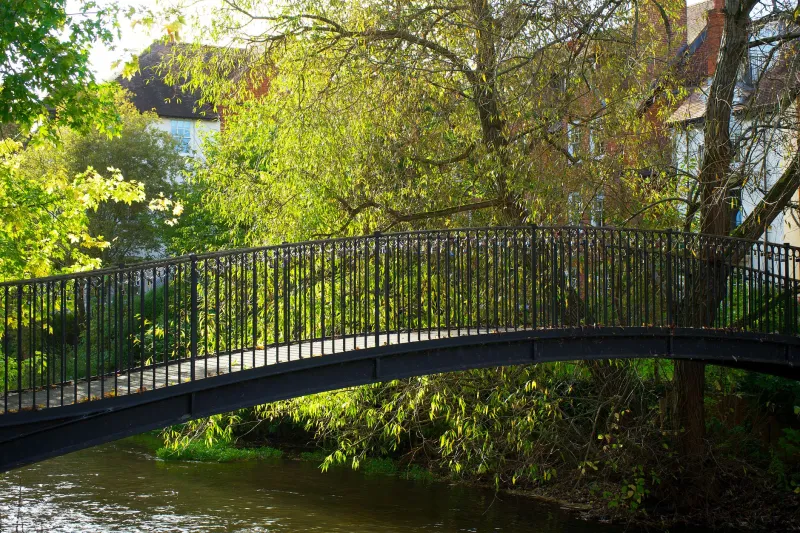
There's a particular kind of quiet on the Dun in mid-November. Not silence exactly — more a hush with a running tap left on somewhere behind it. The frost sits in the hollows of the footbridge planks, the hedges have gone skeletal, and the water below is so clear you can count the stones and start feeling personally responsible for the one bit of orange peel caught on a reed.
That clarity is the whole point, and it's also the reason a small band of local people keep half an eye on this stream all year round.
A river filtered through rock
The Dun is a chalk stream, which sounds like a nice compliment but is actually a fairly exclusive club. Chalk streams are fed by groundwater that has percolated slowly through a chalk aquifer — in effect, the river is the visible end of a very large, very slow sponge. England holds the great majority of them worldwide, and the Kennet catchment, which the Dun eventually joins, is one of the best-known chalk systems in the country.
What that means on the ground is water that stays remarkably cool in summer, stays relatively warm in winter, and carries very little silt because it has been filtered on the way through. The result is the thing you notice from any bridge in the village: gravel you could read a newspaper through.
It also means the Dun is a river that runs on groundwater rather than rainfall. A wet week in November doesn't instantly lift the level. What fills the stream is what soaked down into the chalk weeks or months earlier — which is why a bright, dry autumn can leave a chalk stream looking thinner than you'd expect.
Boots on, west along the water
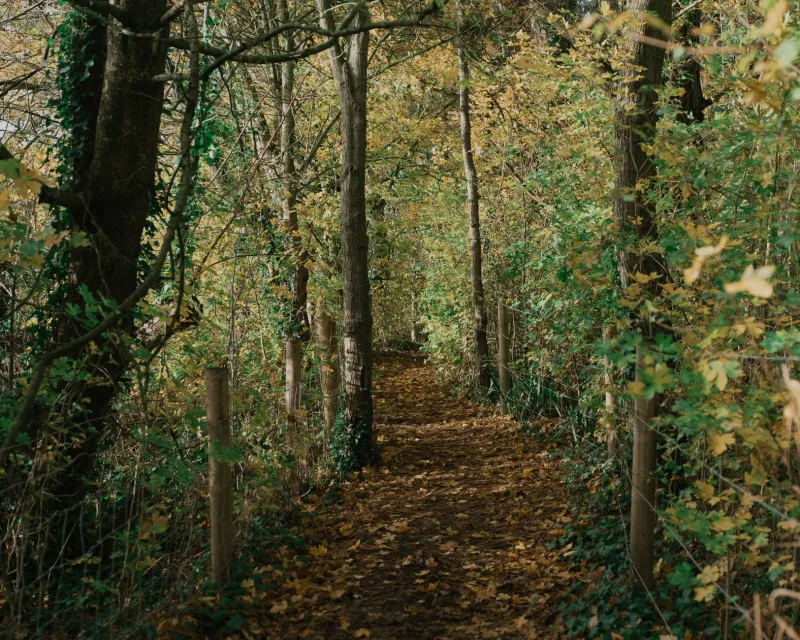
Start where most people start: near the village centre, where the footpaths thread between gardens and the water, and follow the Dun downstream. There's a stretch where the stream runs close to the houses, then opens out as you head towards Little Bedwyn, with the occasional kissing gate, a few stiles, and enough mud to make proper footwear non-negotiable.
Winter is honest about a river. The bankside growth is down, which means you can see the shape of the channel — where it's deep, where it's shallow, where the gravel riffles run. Look for the slight shimmy of water over stones; that's where oxygen gets into the system and where a lot of the river's life happens.
Keep a look out for grey wagtails bobbing on the millraces and weirs, the flash of a kingfisher low and fast, and the odd bullfinch working the hedge line. If you're very lucky and very still, water voles are still about, though they're far less obliging than the field guides suggest.
Why 'clear' isn't always 'healthy'
Here's the slightly awkward part. Chalk streams are beautiful and badly pressured at the same time. They're small, they're sensitive, and they're asked to do a lot: supply drinking water, take treated wastewater, support farming, and look gorgeous for walkers. Abstraction, phosphate enrichment and low flows are the long-running concerns across the Kennet catchment, and the Dun is not exempt from any of them.
Winter adds its own wrinkles. Spawning gravels matter enormously from roughly December into February — brown trout and grayling both use clean gravel, and silt or disturbance can undo a season's work. That's why dogs off leads on the bank near riffles aren't just a nuisance to other walkers; they can be bad news for eggs under the stones.
And when the water is very low and very clear, small things show up sharply: a slick of something that shouldn't be there, an odd colour in a ditch, a sudden bloom of algae where there shouldn't be one. Clarity, in other words, makes the river easier to read — if anyone's reading.
The people with the clipboards
They are. Along the Kennet and its tributaries, volunteer riverfly monitors sample stretches of water on a monthly cycle, counting up mayfly, caddis and stonefly nymphs — the small invertebrates that tell you far more about a river's health than a nice view does. It's unglamorous work: wellies, a net, a tray, a magnifier, and a spreadsheet at the end. But a run of bad samples is one of the earliest warnings a stream gets.
The Environment Agency keeps an eye on flows and water quality, local angling and conservation groups watch their own beats, and the practical stuff — hedge laying, bankside fencing, keeping livestock out of the channel, cutting back where light is needed — carries on through the winter months when the sap is down and the ground is soft.
You don't need a clipboard to help. Garden chemicals and paving instead of grass both add to the load a chalk stream carries; dog waste near the bank, or a blocked ditch that flushes a slug of silt downstream, does measurable harm. If you spot something that looks like pollution — a smell, a discolouration, a fish in distress — the Environment Agency's incident line is the correct first call, not a post in the village group.
A short, honest route
For a straightforward winter wander, allow an hour and a bit. Head downstream from the village on the riverside paths, cross where you can, and loop back on the lanes. Sections get properly wet after rain, and a couple of spots are best avoided entirely when the river is up — check before you commit to a longer version of the walk, and turn back cheerfully rather than ploughing through.
Take a flask. Stand on the footbridge a while, even though it's cold. Watch the water come past at exactly the speed it always does, and think about the chalk underneath, still slowly handing it over.
Then walk home and put the kettle on. The Dun will still be there tomorrow, doing its quiet, improbable work.