Two Departures a Day: A Morning Aboard Great Bedwyn's Village Bus
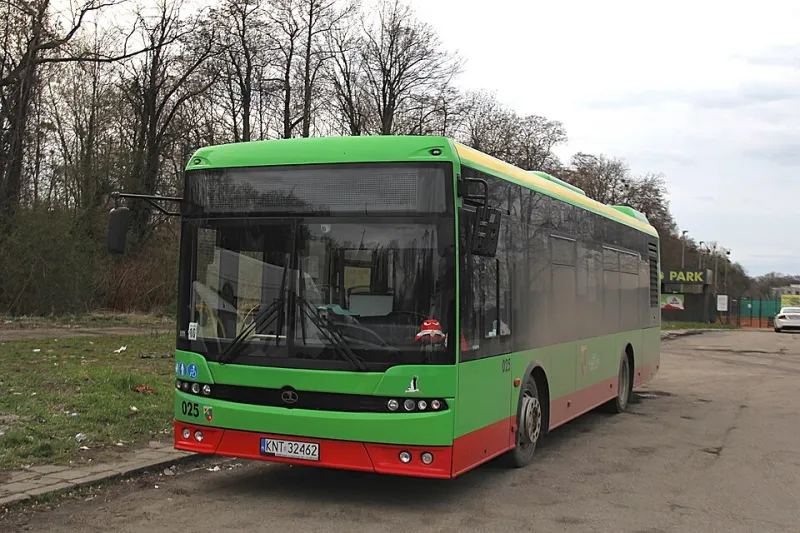
Photo: Jakub.janas.photo, CC BY-SA 4.0, via Wikimedia Commons
There's a particular kind of quiet at a village bus stop. Not the impatient quiet of a city shelter, all headphones and phone screens, but the sociable sort — the sort where somebody says good morning before they've decided whether they recognise you, and where the arrival of the bus is a small event rather than a relief.
Great Bedwyn's service runs twice a day in each direction. That's it. No hourly rhythm, no evening extras, no "just hop on the next one" to fall back on. Which is precisely why the people who use it plan around it the way other people plan around a flight.
The stop by the shop
By twenty to nine there are five of us. A woman with a wheeled shopper and a list folded into a square so small it must be a code. A man in a clean coat who tells everyone within earshot that he's "got the hospital, but it's only the eye bit". A teenager with a school bag and the studied indifference of someone who has done this trip four hundred times.
And then there's the dog, which turns out not to belong to anybody.
It had followed the woman with the shopper up from the lane, sat down at the stop with the weary confidence of a seasoned commuter, and declined every suggestion that it might like to go home. There followed the standard village response to any small crisis: two people making phone calls, one person holding the lead that a passing cyclist happened to have in a pannier, and a general consensus that it was probably the Hendersons' and that it would be fine. It was the Hendersons'. It was fine. The bus, mercifully, was two minutes late, which in village terms is the same as on time.
What the timetable actually does
The honest answer to "when does it run?" is "it depends on the season, the school terms and whichever review has last been published", which is why the printed sheet in the shop window remains the single most-trusted document in the parish. If you're planning a trip, look at that, ring the number on it, or check Wiltshire Council's transport pages — don't take a neighbour's recollection as gospel, however confident they sound.
Broadly, though, the shape of it is this: a morning run and an afternoon run, timed so that you can get somewhere useful and get back the same day. That last part is the whole trick. A bus that drops you in town with no return leg isn't a service, it's a one-way ticket to a very expensive taxi.
The morning run is the workhorse. It picks up through the village and the lanes, takes the school-age passengers towards their secondaries and the rest towards the shops, the surgery, the library and the bank appointments that can no longer be done in person anywhere closer. The afternoon run brings everyone home again, generally with more bags than they left with.
Who's actually on board
Once you're seated, the passenger list reads like a small census of rural life.
- The shoppers, who have converted a bus journey into a social occasion and a logistics operation in equal measure.
- The appointment-goers, clutching letters with reference numbers on them, for whom the bus is the difference between attending and cancelling.
- The school-run stand-ins — grandparents covering a gap, or a parent whose car is in the garage for the third week running.
- The workers, fewer than you'd think but more than you'd guess, stitching together a shift pattern with lifts and the odd long walk.
- The regulars, who know the driver's name and the driver knows theirs, and who will tell you, unprompted, exactly how many years they've been doing this trip.
There is also, on the morning we travelled, a man taking a folded bicycle frame to be mended in a town where he insists the only person who understands it lives. Nobody questions this. Village buses are not for interrogating people's errands.
Passes, fares and the small print
For anyone eligible, the English National Concessionary Travel Scheme pass makes the journey free at the quieter times of day — which for a great many passengers is the entire point, and the reason the service still carries the numbers that justify it. If you've hit the qualifying age or have an eligible disability, and you haven't sorted a pass, that's a phone call worth making this week rather than next spring.
Everyone else pays a fare, and on most rural runs you'll want to have some cash about as well as a card, because the machine doesn't always cooperate and the driver doesn't always want the queue behind you to learn that. Ask about returns — a day return is usually the sensible buy if you're coming back on the afternoon.
Connections, and the art of the wait
Here's where a twice-daily service demands a certain temperament. Connections are not always elegant. Sometimes the rail connection at the station works beautifully; sometimes you'll watch a train pull out while the bus is still negotiating a bend. Sometimes the wait back is forty minutes and there is nothing to do but sit in the shelter and finish your book.
Experienced passengers have built small rituals around this. There is a bench. There is a flask. There is a WhatsApp group that functions, in effect, as a live departure board maintained by people who happen to be standing near the stop. If you're new to it, ask on the village page the day before — someone will almost certainly know whether the afternoon run is running, and whether it's the usual driver.
Why the second bus matters most
A single daily service is transport. Two is independence. The second departure is the one that turns "I can get there" into "I can get back", and it's the one that quietly keeps a lot of people out of the position of having to ask for a lift, or to skip the appointment, or to give up the Saturday shop.
It's worth saying plainly that services like this don't survive on sentiment. They survive on passenger numbers and on council decisions made a long way from the lane end. The Wigglybus once showed the Pewsey Vale what imaginative rural transport could look like — and its ending showed just how quickly a good idea can be unpicked. Every journey logged on the village run is, quite literally, an argument for the next one.
So: use it. Not as a favour, not as a novelty, but as the ordinary, unremarkable, twice-daily thing it ought to be. And if you see a dog at the stop that clearly isn't anybody's, it's the Hendersons'. It's always the Hendersons'.